Our educational standards are in line with the foundations of Lehrplan 21, the Swiss-German curriculum. In the upper school we draw on the framework concept for career choice preparation at secondary level as well as further guidelines of the Bern Department of Education and Culture. The core content is the educational system.
We follow a systemic-constructivist approach. This means that children build their knowledge themselves by linking their own experiences with new content. When learning makes sense and connects to the children’s world, real connections form in their thinking – and their knowledge grows organically and sustainably. Play and intelligence are closely connected. In play, children become completely absorbed and connect with the state of flow. In flow, peak performance is achieved with a sense of joy and ease. In flow, children and young people act out of intrinsic motivation and with enthusiasm.
We encourage individual, self-directed, self-organised and project-based learning. We keep encouraging children to try new things and look for creative solutions. Children and young people flourish when they are allowed to learn exactly where something new sparks their curiosity and growth is possible – in their zone of development.
In how we treat each other, we practise nonviolent communication (M. Rosenberg). Emotional, social and ethical competences, as well as sustainability, are central educational concerns for us.
www.see-learning.ch
We cultivate a growth mindset: with curiosity we venture out of our comfort zone into the learning zone, where everything may be tried out, explored and discovered anew. We want to enable children and young people to believe in their abilities and talents and to strengthen their resilience, so that they become courageous and enthusiastic shapers of their world.
By fostering individual creative expression in music, theatre, dance and art, children and young people develop self-confidence and presentation skills. This encourages them to realise their own ideas and projects and to commit actively to a diverse, sustainable and peaceful world.
What does Arboro actually mean?
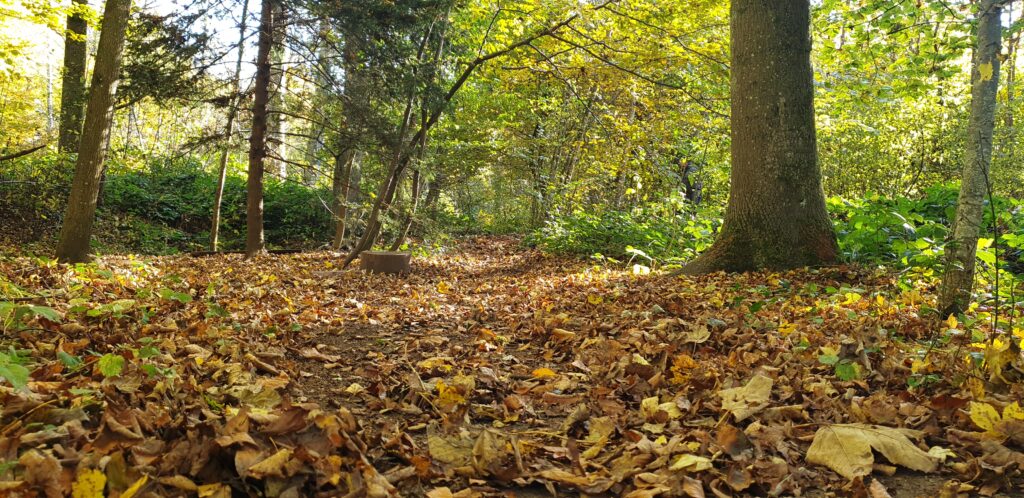
Arbor means tree in Esperanto. Trees are life-giving beings. They are in relationship with one another. Their strong roots draw nourishing strength from the earth. They stretch their crowns towards the sky. They grow steadily, slowly, each on its own and yet connected in a community. They are in constant mutual communication. The forest stands for a complex, co-existing and economical system. Each tree stands and grows on its own at its individual pace and is at the same time connected with everything that is.
Our principles
playing / learning
trusting
growing
Working with parents
Close and intensive work with parents is close to our hearts. Parent meetings are an important part of our work with the children. In conflict situations we talk with the parents and look for solutions together.
Parents are the experts on their children. Through them we learn what helps their child most in a particular situation. Networked, the diverse resources of parents can contribute substantially to a good working atmosphere. This foundation is important so that children and young people feel understood, loved and supported.
Working with parents is also cultivated through shared celebrations, projects, work days and training events. It is important to us that parents connect with and support one another.
There is an Arboro parents’ council that takes up concerns and wishes in order to support the whole school.